
Hello!
I’m Yuanjun Lin
I turn complex data into practical insights and analytical systems. With a background in Data Science and Operations Research from Duke Kunshan University and UC Berkeley, my work spans statistical modeling, machine learning, automation, quantitative research, and data-driven decision-making. I’m especially interested in building tools and models that move from exploration to real-world application.
My recent work has focused on quantitative finance, financial data research, and developing repeatable Python-based systems for market analysis and risk evaluation.
– Visit my Fiverr for end-to-end data solutions:
Fiverr Home
Current Work
Quantitative Financial Modeling and Market Research
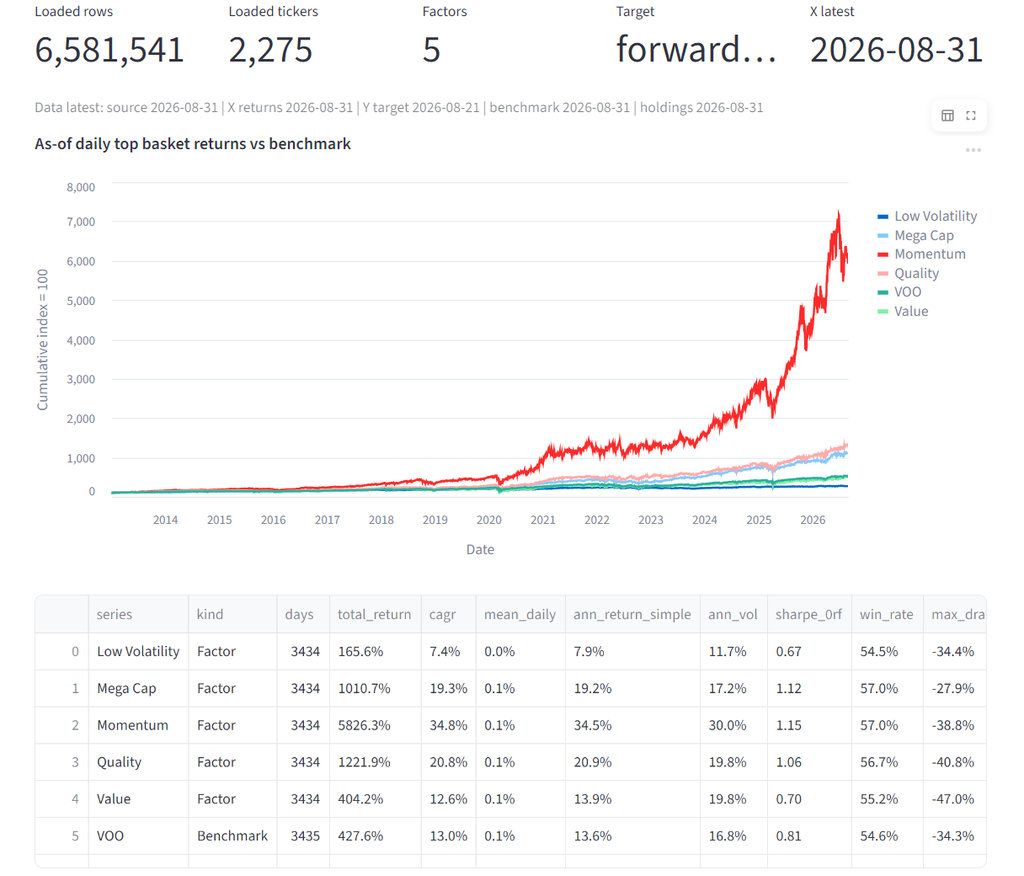
Factors Extracted for Machine Learning Rotation Strategy
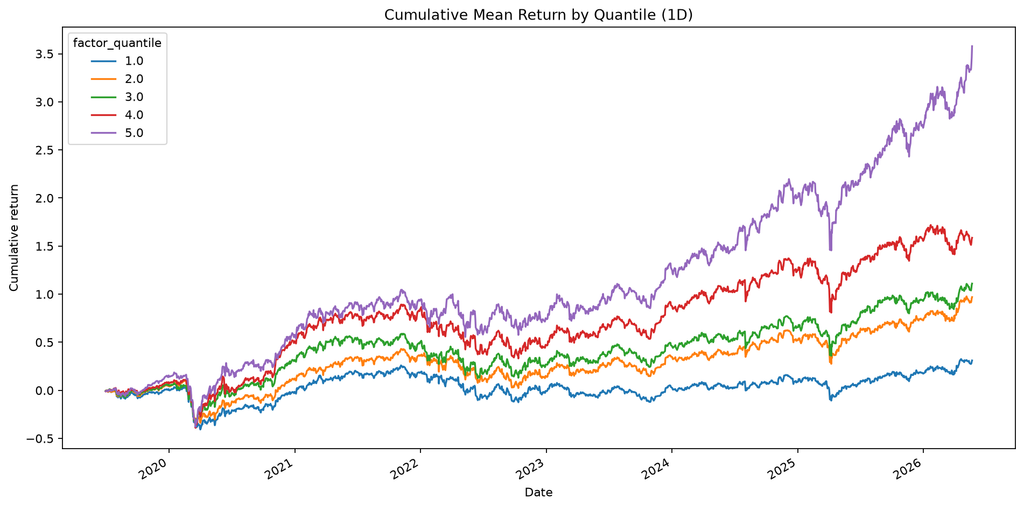
Tear Sheet of Sample Factor Strategy
The project involved end-to-end quantitative equity research and research infrastructure development. The work included acquiring and maintaining large-scale historical market, fundamental, score, analyst, macro, and index datasets; designing a consolidated model-ready research table; engineering alpha, risk, liquidity, valuation, quality, momentum, volatility, macro, and sector-relative features; building supervised learning workflows for return prediction and signal ranking; evaluating signals through IC, quantile spread, rolling stability, and portfolio backtesting; and creating Streamlit applications to make the research process reproducible, inspectable, and usable for daily decision support.
The research tools supported both exploratory and repeatable workflows: data validation notebooks for checking raw and processed datasets, factor labs for quickly testing new feature definitions, timing-signal dashboards for single-stock prediction and daily candidate generation, multi-factor dashboards for comparing factor baskets and ETF proxies, backtest runners for model and portfolio parameter experiments, and tear sheet generation for formal performance diagnostics.
Featured Previous Works
Neural Network-Based Heuristic Selection for Optimization Challenge
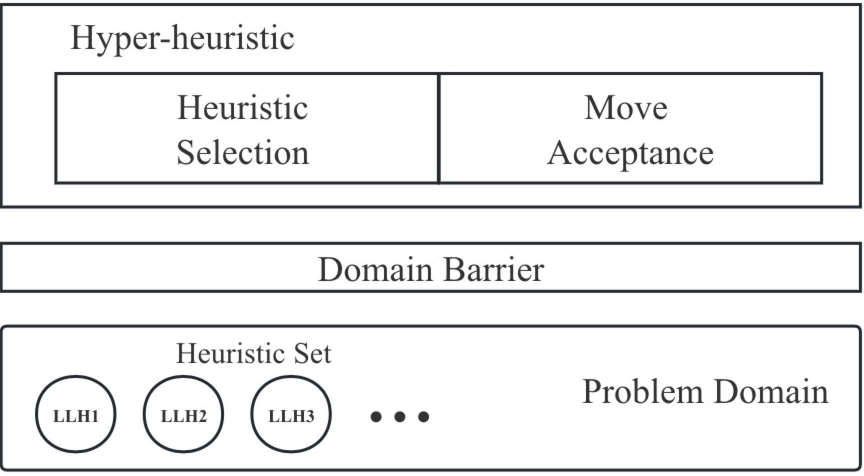
An Illustration of Selection Hyper-Heuristic Framework
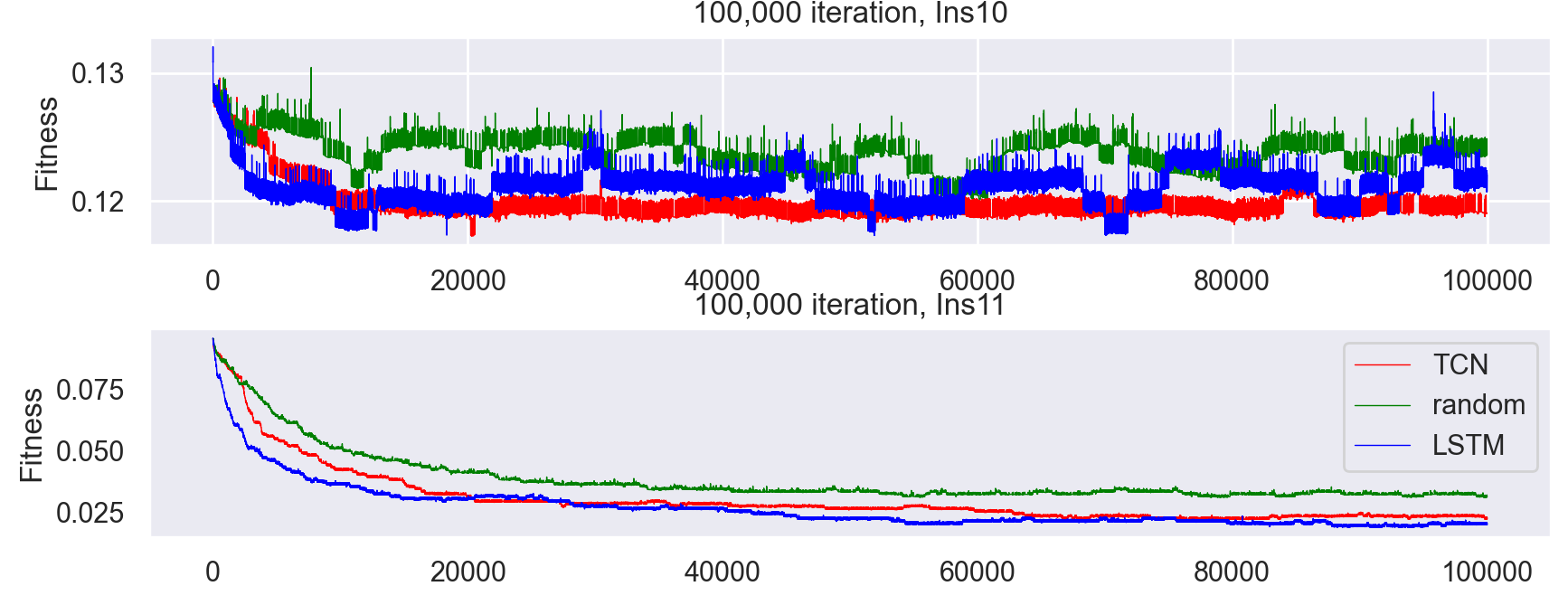
Fitness of Model Solutions on Bin Packing Instances
This is a two-person project published in 2023 IEEE CEC, where I was in charge of generating learnable data from a previous Java hyperheuristic framework, developing the LSTM-based selection hyperheuristic (SHH), and finally performance evaluation.
In combinatorial optimization, the quest for efficiency often leads to the exploration of NP-hard problems as a testing field. Our project pioneers the use of neural networks, specifically LSTM and TCN architectures, to establish an SHH that is able to learn from previous HHs and utilize the advantage they have under different circumstances such as the nature of the instance and problem domain. This approach not only elevates the adaptability of heuristic selection across varied problem instances but also encapsulates the collective intelligence of multiple selection hyper-heuristics into a unified, efficient system
Genetic Algorithm-based Diversified Article Recommendation System
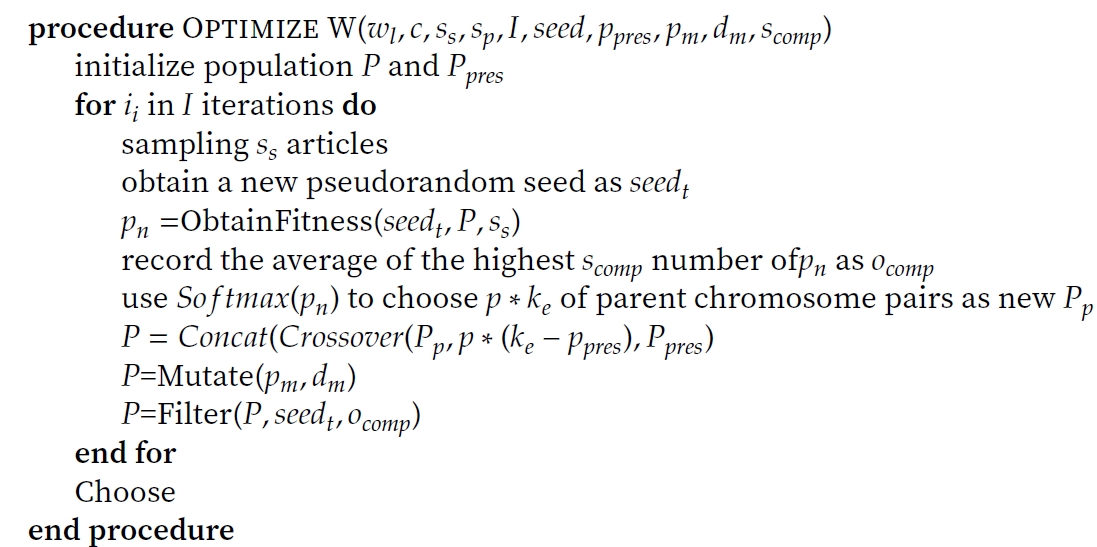
This is an ongoing independent study on a genetic algorithm (GA) optimized article recommendation system.
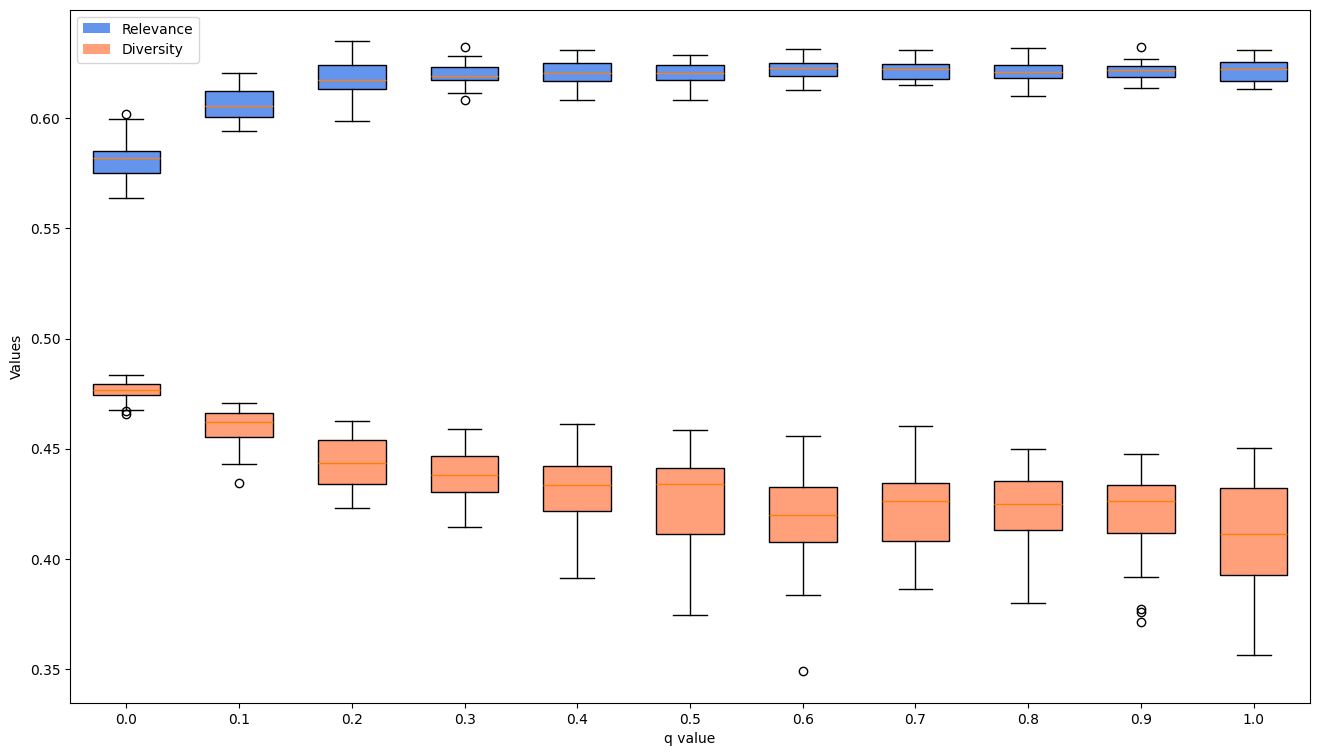
The aim is to finetune the balance between relevance and diversity. Altering conventional similarity assessment methods and incorporating a diversity coefficient, the research tackles the prevalent issue of narrow content scope in content‐based systems. The approach entails detailed data processing and feature extraction to refine recommendation quality and efficiency. Empirical results, evidenced by significant ANOVA outcomes for both relevance and diversity (P < .01), affirm the model’s efficacy in delivering a more engaging and varied content selection to users.
The structure is complete with results, yet some improvements such as more efficient Doc2Vec preprocessing and an improved structure with multi-fold weight that is partially inspired by maximal marginal relevance algorithm are being implemented.
An Illustration of Selection Hyper-Heuristic Framework
Fitness of Model Solutions on Bin Packing Instances